
<p>In Presidente Prudente, in western São Paulo state, <strong>99.9 FM</strong> is part of daily life for the city's radio listeners. The educational station is run by the Agripino Lima Foundation and is also known as <strong>99.9 FM Unoeste</strong>, after its link to the Universidade do Oeste Paulista.</p> <h2>A station rooted in a university</h2> <p>Unoeste grew out of the project of professors Agripino de Oliveira Lima Filho and Ana Cardoso Maia de Oliveira Lima, starting from the Presidente Prudente Educational and Cultural Association, founded in 1972. 99.9 FM is part of the Lima family's media group, which also includes TV Fronteira and Uno TV, an educational channel affiliated with TV Cultura.</p> <h2>Ricardo Veiga</h2> <p>Among the station's professionals is <strong>Ricardo Veiga</strong>, a journalist and advertiser and an excellent audiovisual professional. Beyond his work at 99.9 FM, he runs projects and startups in many fields, with experience that shows in the results.</p> <h2>What an educational station is for</h2> <p>Educational stations carry a commitment beyond entertainment: public-service information, culture and room for local production. In an age of algorithms and playlists, a station that speaks to its city, live, is still company and a meeting point.</p> <h2>Isac Martin and emRadios</h2> <p>The photo in this story was taken in the 99.9 FM studios, when Ricardo Veiga met <strong>Isac Martin</strong>, the creator of emRadios. It was a pleasure to see Ricardo's exemplary work up close. emRadios brings together stations from more than 200 countries in one place to listen to live, for free, on the website and in the app, and was born from the idea that local radio deserves to be found by the whole world.</p> <h2>Listen on emRadios</h2> <p>99.9 FM is on emRadios and can be heard live, for free, on the website and in the app: <a href="https://emradios.com/en/radios/99-9-fm-educativa-de-prudente-sp">listen to 99.9 FM from Presidente Prudente</a>.</p>
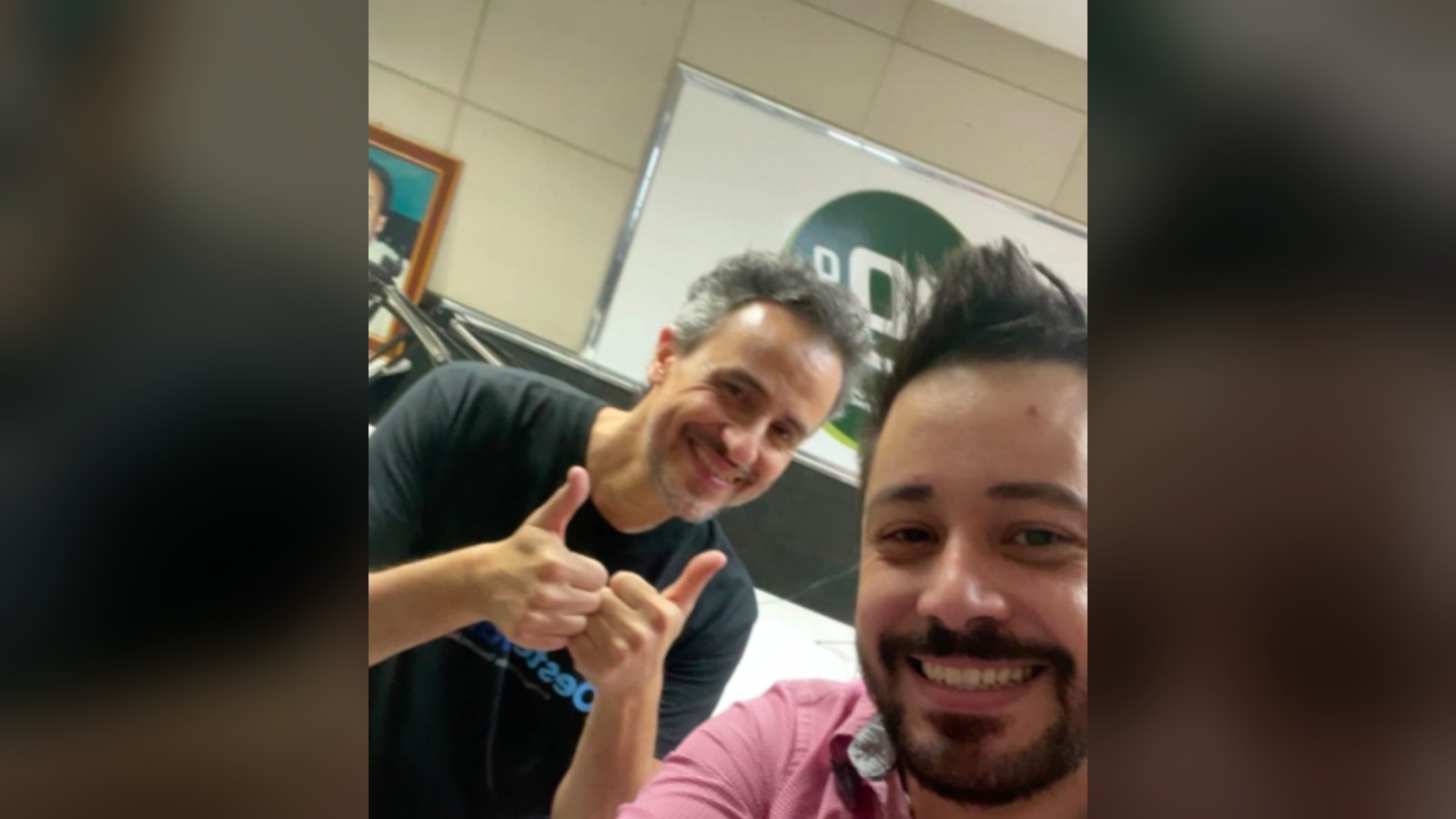
99.9 FM: Presidente Prudente's educational station and the work of Ricardo Veiga
Originally published on emRadios
News
 0800 027 3020